Septic & Waste Tank Level Monitoring: Empty Before It's Full with the TEK 766
16th October 2026•By Neil Skoglund
TEK 766 Use Case
Nobody looks inside a cesspit or waste tank until they have to. It fills quietly in the background, and the first sign of trouble is often a tank that is already full - an overflow, a tanker booked at short notice and usually at a higher price than a planned collection, and guests or staff who notice before you do.
This guide is for anyone responsible for a tank that has to be emptied: off-mains homes and properties with cesspits or holding tanks, holiday parks and campsites, rural venues, farms, workshops and garages with waste-oil tanks, and businesses with wastewater holding tanks. It shows how a Tekelek TEK 766 mounted on top of the tank and reporting into Trackpac tells you when the level is getting high, so you can book emptying in normal hours instead of reacting to an overflow.
Cesspits, Septic Tanks & Waste Oil: What the Level Tells You
"Waste tank" covers a few different set-ups, and a level reading means something slightly different in each. It's worth being clear which one you have before you set alerts.
Cesspits & holding tanks: fill and empty
A cesspit or sealed holding tank has no outlet - everything that goes in stays in until a tanker empties it. The level rises steadily, so the question is simply how close it is to full and when the next collection should be booked.
Septic tanks: watch for an unexpected rise
A septic tank normally runs at a fairly constant working level, because settled liquid flows out to a drainage field as new wastewater comes in. It isn't "full" in the cesspit sense. The useful signal is the level climbing above its usual line, which can be an early hint that the outlet or drainage field isn't coping and is worth having checked. The sensor sees the liquid surface, not the sludge at the bottom, so it doesn't replace regular desludging.
Waste-oil tanks: book collection in time
Workshops, garages and farms collect used oil until a collection is due. Knowing the actual level means you book the collection while there's still room, rather than discovering at the end of a busy week that there's nowhere to drain the next vehicle.
Wastewater holding tanks: plan around usage
Wash-down water, process water and other wastewater held for collection fill at whatever rate the business runs. A level reading lets you match collections to how busy you've actually been, not to an average.
How the TEK 766 Reads a Waste Tank
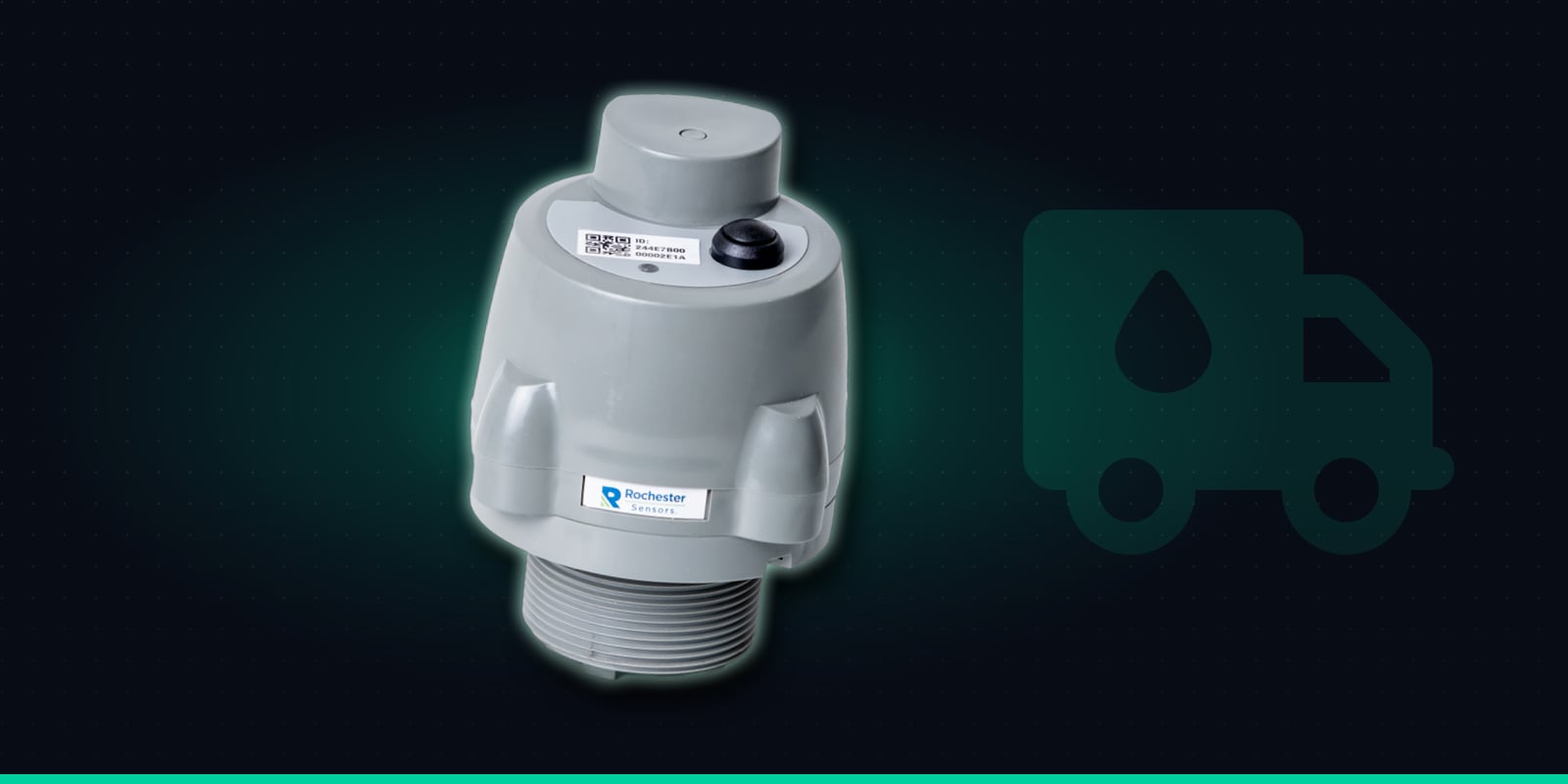
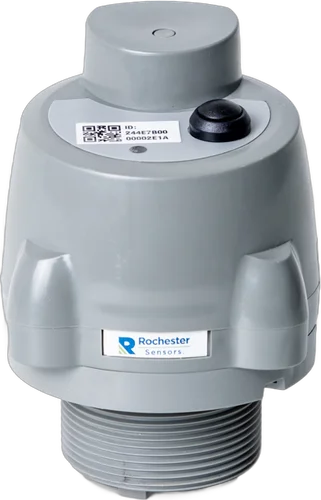
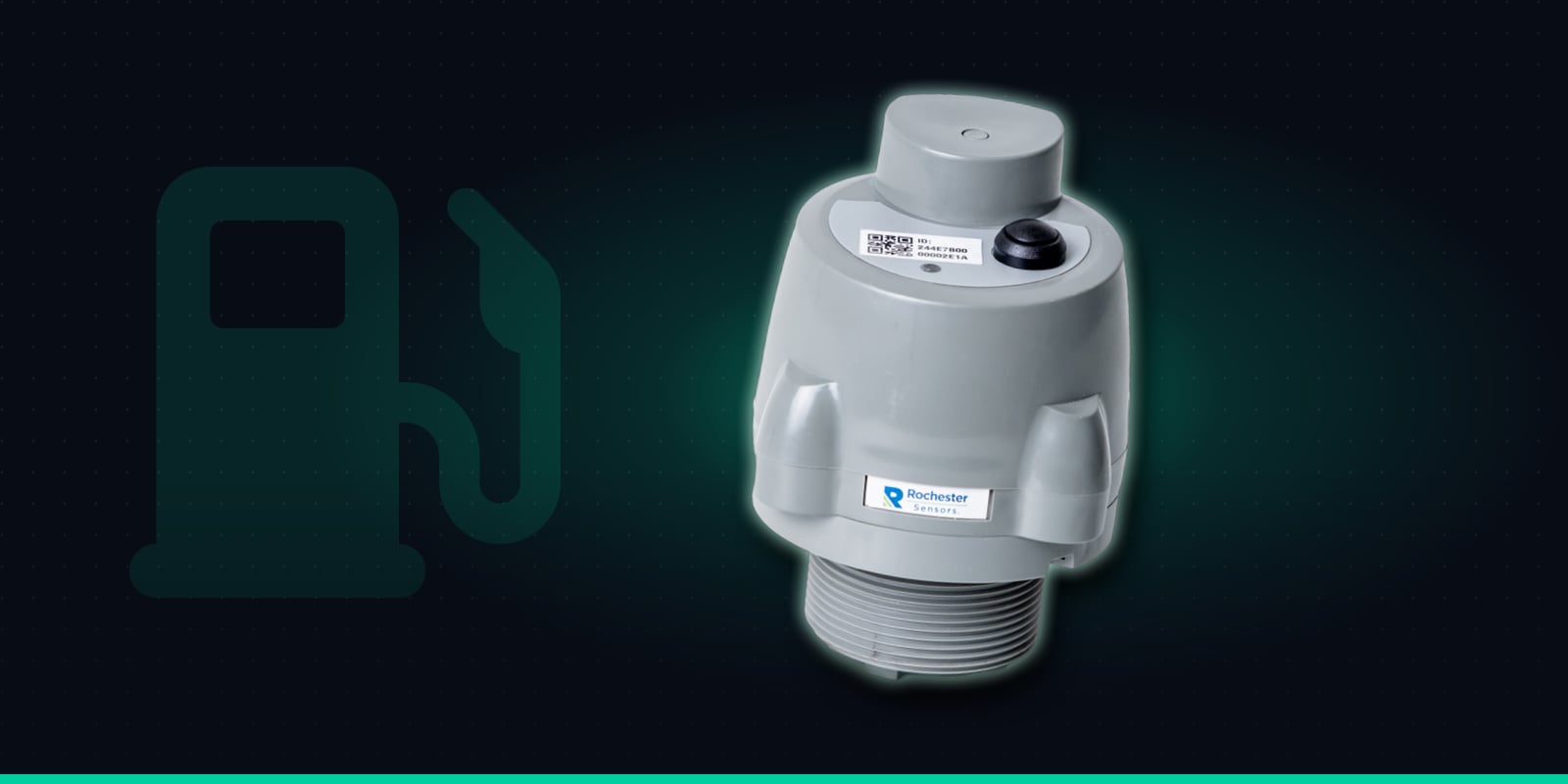
The TEK 766 is a battery-powered ultrasonic sensor with built-in LoRaWAN. It screws into an existing opening on top of the tank and measures the distance down to the liquid surface, so it never touches the contents. Enter the tank's dimensions or capacity in Trackpac and that distance is converted into a fill level percentage and a volume in litres or m³.
Ultrasonic level
Measures 12cm to 4m down to the liquid surface. Typically ±2cm accurate, 1cm resolution.
Non-contact
Sits on top of the tank and never touches the contents. Fits 1¼", 1½" or 2" BSP openings.
Compatible liquids
Water, diesel, kerosene and gas oil. Check other liquids with the manufacturer first.
Built for outdoors
IP67, UV-stabilised housing. Operates from -20 to 50°C.
Up to 14-year battery
Typical life with a reading every 15 minutes and a report every 6 hours.
LoRaWAN EU868
Long-range, configurable remotely - no Wi-Fi or SIM card per tank.
Specifications from the Tekelek TEK 766 datasheet. Battery life depends on how often the sensor reports.
Check compatibility first. The manufacturer's datasheet lists water, diesel, kerosene and gas oil as compatible liquids. Hexaspot also lists waste oil and wastewater, but sewage and other wastewater vary a lot from one tank to the next. Foam, a crust of scum on the surface or heavy condensation inside the tank can affect ultrasonic readings, so confirm suitability for your tank with the manufacturer - Tekelek, now part of Rochester Sensors - before you install.
Underground cesspits and holding tanks are rarely neat rectangles. If yours has an irregular shape, treat the percentage and litre figures as an approximation and set your alerts on the distance reading in centimetres, which is measured directly. Either way, the first few weeks of history show you what "normal" looks like for your tank.
Empty on Actual Level, Not a Fixed Schedule
Many tanks are emptied on a fixed schedule because nobody knows the real level. That tends to go wrong in one of two directions. In quiet months the tanker arrives to empty a tank that was nowhere near full, and you pay for a collection you didn't need. In busy months - a full holiday park in August, a run of weddings at a rural venue, extra staff on site - the tank fills faster than the schedule assumes, and you get a near-miss or a call-out at short notice.
With a level reading you can book a collection when the tank actually reaches the point where you'd want it emptied, with enough notice for the contractor to fit you into a normal round. Over a year, the history graph shows how quickly each tank fills in each season, so you can see whether you're paying for collections you don't need, or cutting it too fine in your busiest months.
Installing a TEK 766 on a Waste Tank
1
Order "Trackpac Ready", scan and name it
Buy the TEK 766 from Hexaspot with the Trackpac Ready option, scan its QR code in the Trackpac app and give it a name that means something in an alert, such as "Shower block B - holding tank". Tag it by site or block, and enter the tank's dimensions or capacity.
2
Use a top opening with a clear view down
The sensor fits 1¼", 1½" or 2" BSP female threads (2" is recommended), with the gasket included. Its beam spreads up to 30°, so choose an opening where the path down to the liquid is clear of inlet pipes, baffles and walls - an incoming flow or a baffle in the beam can give misleading readings. The sensor needs a reasonably flat liquid surface, so avoid mounting directly above where the inlet splashes in.
3
Set the high alert with margin
The TEK 766 measures from 12cm to 4m below the sensor, so there is a 12cm dead zone directly underneath it where it can't read. Set your high-level alert well below that point, leaving room for the time it takes to book a tanker and for the tank to keep filling until it arrives.
4
Check coverage with the lid closed
Underground tanks often sit beneath a lid or cover, and ground level, chambers and covers - especially metal ones - all reduce radio range. Read what to check about LoRaWAN coverage before you plan, then confirm the sensor is reporting with the cover back in place before you leave site.
Alert Rules That Get the Tank Emptied in Time
Trackpac can alert on distance, fill level, fill volume, temperature and battery, by email, SMS or push notification. Rules can target tags, so a new sensor tagged with a site picks up that site's rules automatically. A few rules cover most waste tanks:
Getting high: book emptying
An above-threshold rule on fill level - or below-threshold on distance - set early enough to book a collection in normal hours. Send it to whoever books the tanker.
Nearly full: chase it up
A second, higher threshold - still clear of the 12cm dead zone - as a backstop if the first alert hasn't led to a collection. Send this one by SMS as well as email.
Septic tank above working level
Once the history shows the tank's usual level, set a threshold a little above it. A rise past that line is a prompt to get the outlet and drainage field looked at.
Battery low: plan a replacement
A below-threshold rule on battery means a sensor under a lid doesn't go quiet unnoticed in the middle of the busy season.
Use time windows so routine "book emptying" alerts arrive during office hours, and a trigger-lock interval so a high tank sends one alert rather than one every report. A "resolved" message confirms when the level has dropped back after a collection.
Bear in mind that alerts arrive with the next report, not the instant the level changes. The typical 14-year battery life assumes a measurement every 15 minutes and a report every 6 hours. Holding tanks usually fill gradually, so that is often enough, but the reporting interval can be shortened remotely - for example on a holiday park at peak season - at the cost of shorter battery life.
Several Tanks, One Dashboard
Holiday parks, campsites and larger venues often have several tanks serving different shower blocks, lodges or facilities, each filling at its own rate. Tag each tank by site and block and they all appear on one dashboard, so you can see at a glance which needs emptying next and group collections into one visit where it makes sense.
A read-only dashboard link lets your emptying contractor see the levels for themselves and plan collections around them, without being able to change anything in your account. Webhooks can forward readings and alerts into your own booking or maintenance system, or the contractor's - Trackpac doesn't book the tanker itself, but it gives you, or your systems, what you need to.
History graphs, reports and exports show the fill rate of each tank season by season, which helps when you agree collection arrangements for next year. The Trackpac mobile app puts every tank on your phone, and there is no Wi-Fi or SIM card per tank. See Trackpac pricing for what's included.
Get Started
Know when your waste tank needs emptying
A TEK 766 on top of each cesspit, holding tank or waste-oil tank, reporting its level to a Trackpac dashboard with an alert in time to book a collection.
€164.46 ex VAT from Hexaspot, our sister company in the Connect IoT group. VAT is added at checkout based on your country.
Choose the Trackpac Ready option and the sensor arrives pre-registered on Trackpac - scan the QR code and it's live on your dashboard.
Trackpac covers connectivity, dashboard, alerts and data storage from £15 / €18 per sensor per year.
Can the TEK 766 be used in a cesspit or sewage holding tank?↓
The TEK 766 measures the distance down to the liquid surface without touching the contents. The manufacturer's datasheet lists water, diesel, kerosene and gas oil as compatible liquids, and Hexaspot also lists waste oil and wastewater. Foam, a crust of scum or heavy condensation can affect ultrasonic readings, so confirm suitability for your sewage or wastewater tank with the manufacturer, Tekelek (now part of Rochester Sensors), before you install.
Does a septic tank need a level sensor if it never fills up?↓
A septic tank normally sits at a fairly constant working level, because settled liquid flows out to a drainage field as new wastewater comes in. So a level sensor won't tell you it is 'full' in the way a cesspit fills. What it can show is an unexpected rise above that usual level, which can be an early sign that the outlet or drainage field isn't coping and is worth having checked. The sensor measures the liquid surface, not the sludge at the bottom, so it doesn't replace regular desludging.
How quickly will Trackpac tell me a tank is getting full?↓
The alert fires on the first report that crosses your threshold. The TEK 766's typical 14-year battery life assumes a measurement every 15 minutes and a report every 6 hours, so with that setting a change shows up within hours rather than instantly. Holding tanks usually fill gradually, so that is often enough, but the reporting interval can be shortened remotely for busy periods - accepting shorter battery life. Set your high alert with enough margin to book a collection comfortably.
Will the sensor work on an underground tank under a lid?↓
It mounts in an opening on top of the tank, so it can sit under an access lid or cover. Ground level, chambers and covers - especially metal ones - reduce LoRaWAN range, so check coverage at the tank and confirm the sensor is reporting with the lid closed before you finish the installation.
Where can I buy the TEK 766 for use with Trackpac?↓
The Tekelek TEK 766 is sold by Hexaspot, Trackpac's sister company in the Connect IoT group, for €164.46 ex VAT, with VAT added at checkout based on your country. Choose the 'Trackpac Ready' option and the sensor is pre-registered on Trackpac, so you only need to scan its QR code. A Trackpac subscription from £15 / €18 per sensor per year covers connectivity, the dashboard, alerts and data storage.
Managing tanks across a holiday park, a group of venues or several sites? Get in touch and we'll help you plan sensors and coverage. New to the terminology? Our LoRaWAN glossary and FAQ covers the basics.