Nursery EC & Fertigation Monitoring with the SE01-LB
15th October 2026•By Neil Skoglund
SE01-LB Use Case
Feeding and watering a nursery by the calendar works until it doesn't. One bed of field-grown stock sits on heavier ground and holds on to everything you give it. The next drains quickly and runs hungry. A line of large containers in full sun is dry by mid-afternoon while the shaded row beside it is still wet. By the time leaf colour or growth tells you something is off, the root zone has often been wrong for a while.
This guide shows how tree and shrub nurseries, container growers and garden centres can use the Dragino SE01-LB with Trackpac to watch soil moisture, soil temperature and electrical conductivity (EC) bed by bed - so you can see when a bed is drying out, when salts are building up and when feed is running low, with an alert to prompt a check rather than waiting for the plants to show it. For an overview of every sensor Trackpac supports on the land, see our guide to smart agriculture sensors.
EC: A Practical Window on Nutrients and Salts
Electrical conductivity measures how easily electricity passes through the water in the soil. Pure water conducts poorly; dissolved fertiliser salts make it conduct far better. That makes EC a handy proxy for how much dissolved nutrient - and salt - is sitting in the root zone. It won't tell you which nutrient is present or missing, but it is a useful guide to whether the overall level is going up or down.
For a grower, the direction of travel is what counts:
Rising EC: salts building up
If EC keeps climbing feed after feed, salts may be accumulating faster than the plants use them. A leaching irrigation - a heavier watering that flushes excess salts down past the roots - is a common response, ideally after confirming with your own tests.
Falling EC: feed being used up
A steady decline, especially after heavy rain or a long run of irrigation, suggests nutrients are being taken up or washed through - and that the next feed may be due sooner than the schedule says.
Read EC alongside moisture
Drier soil generally conducts less, so the same nutrient level can read differently before and after watering. Compare EC at similar moisture levels rather than reacting to every swing.
Bulk soil EC is not the EC of your feed
The SE01-LB measures bulk soil EC: the conductivity of the whole soil-water mix around its pins, not the feed solution coming out of your dosing unit or the water draining from a pot. Soil particles and air sit between the pins too, so the number usually reads lower than the liquid alone would, and it won't match your recipe figure for figure. That's fine: what matters is the trend over time and the comparison between beds. Readings are temperature compensated, and Trackpac reports EC in µS/cm (1 mS/cm on a feed recipe is 1,000 µS/cm).
What the SE01-LB Measures
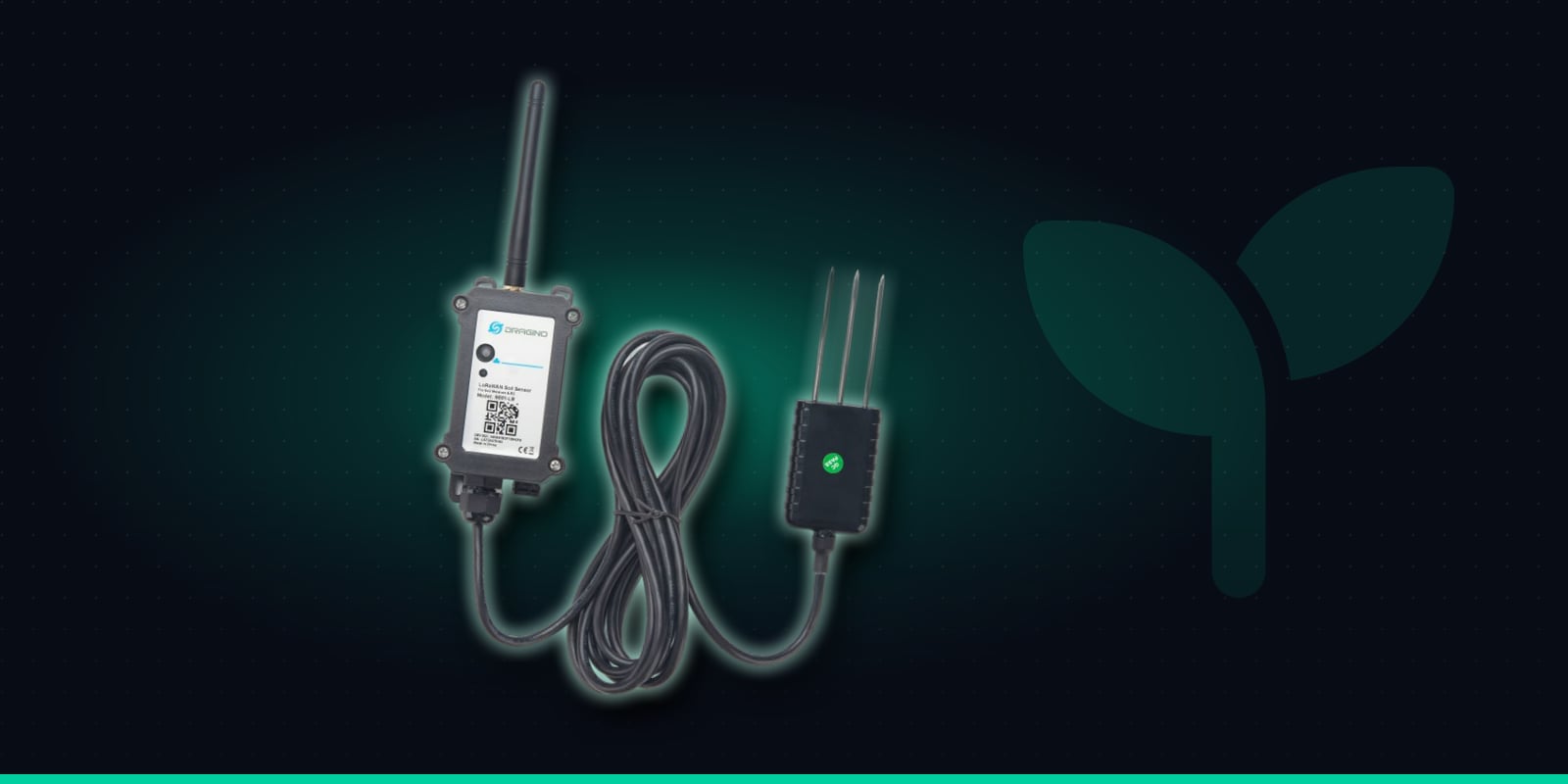
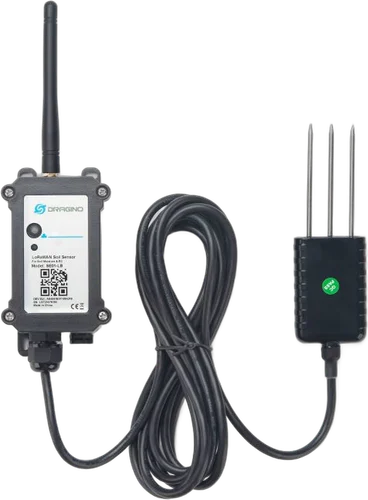
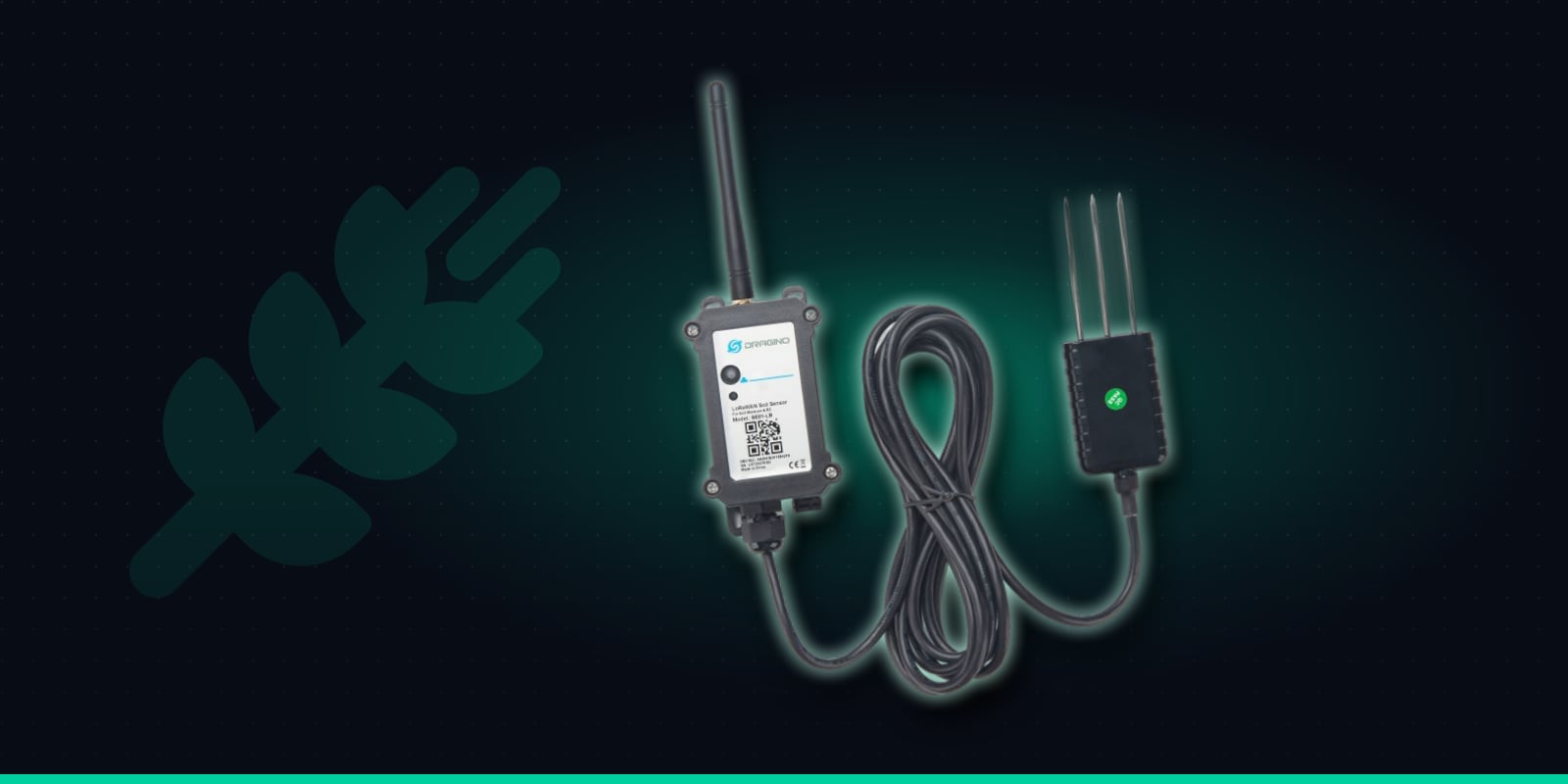
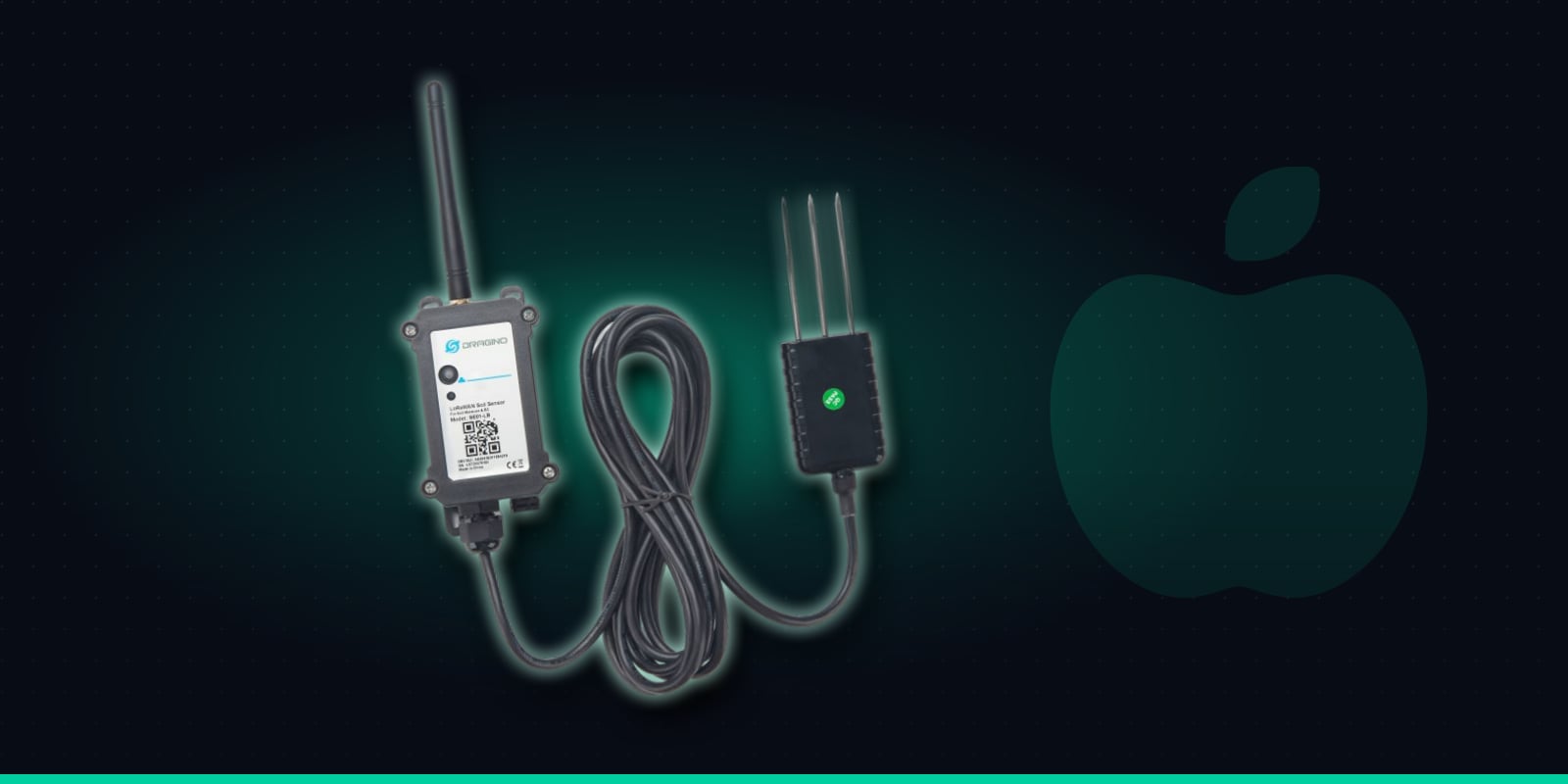
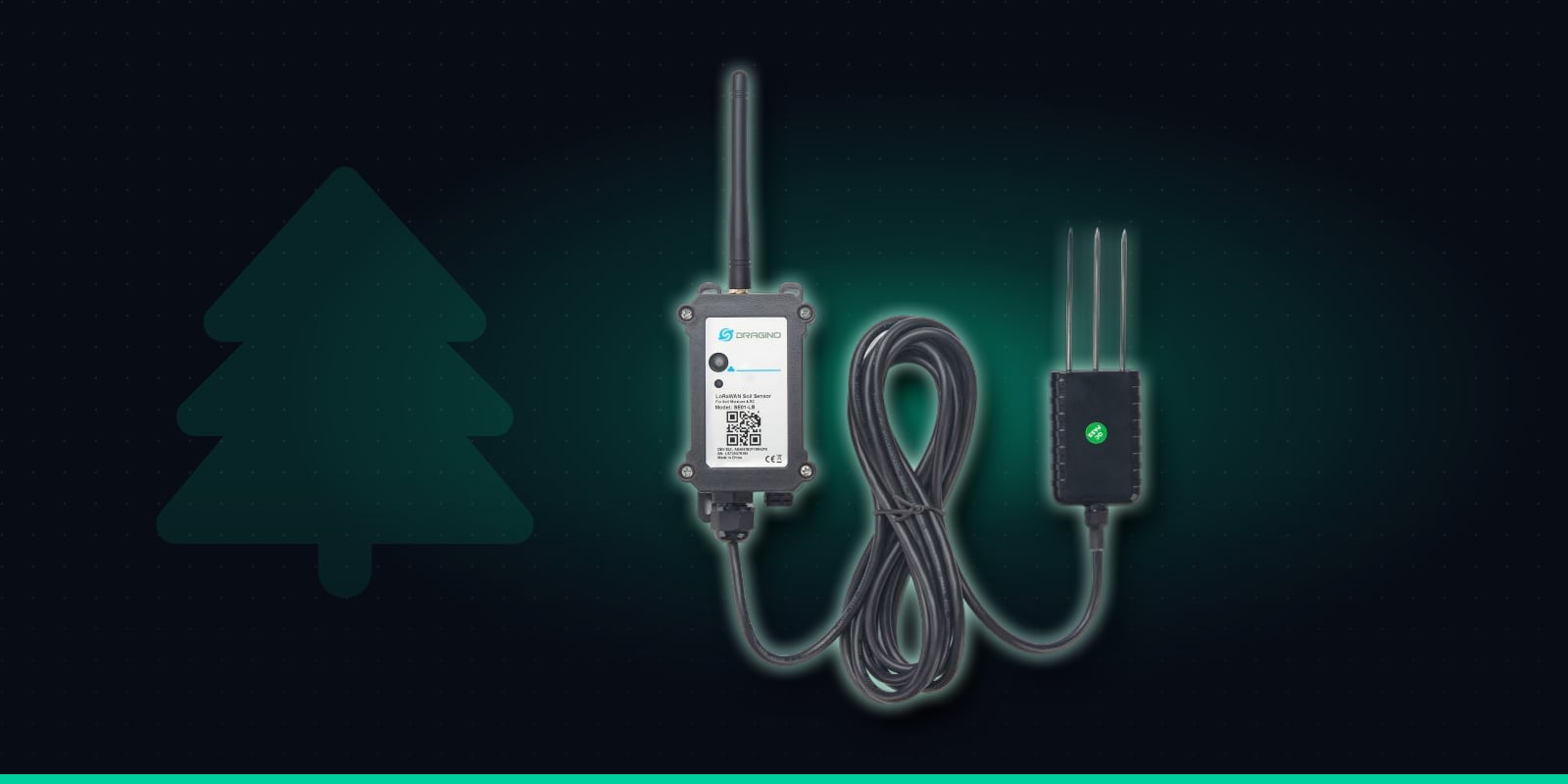
Each SE01-LB has a three-pin stainless steel probe on a cable, connected to a weatherproof IP66 enclosure that holds the battery and the LoRaWAN radio with its antenna. The probe goes into the root zone; the enclosure stays above ground. It uses the FDR (frequency domain reflectometry) method with temperature and EC compensation, and reports every 20 minutes by default - an interval you can change.
Soil moisture
0 to 100% volumetric water content. ±3% accuracy up to 53%, ±5% above.
Soil temperature
-40 to 85°C. Better than ±0.3°C between -10 and 50°C.
Soil conductivity (EC)
0 to 20,000 µS/cm, temperature compensated, 2% full-scale accuracy.
Built for outdoors
Weatherproof IP66 enclosure with a buried three-pin probe on a cable.
8500mAh battery
Rated for up to 5 years, depending on reporting interval.
Datalog
Stores readings when out of coverage and sends them once it reconnects.
Specifications from Dragino's SE01-LB documentation. Factory calibrated for mineral soils.
Important: Peat, Coir, Bark and Other Substrates
This is the caveat that matters most in a nursery. The SE01-LB is factory calibrated for mineral soils - loamy and saline-alkaline soils. Field-grown stock in mineral soil is the closest match to that calibration. Peat, coir, bark and blended potting substrates hold water and conduct differently, so the absolute moisture percentage and EC figures won't be accurate out of the box.
That doesn't make the sensor useless in substrates. It means treating the readings as relative trends - wetter or drier, rising or falling - and calibrating against your own measurements before you trust a number or set a threshold:
Pair readings with a reference test. Measure EC with a pour-through test and a handheld meter, or send substrate samples for lab analysis, and note the SE01-LB reading taken at the same time.
Repeat over a few weeks. Cover wet and dry spells and the days either side of a feed, so you can see how the sensor's numbers move against your reference.
Calibrate moisture against your own judgement. Note the reading when you would normally water - by pot weight, by hand or by experience - and use that as your "dry" threshold. Re-check thresholds if you change the mix or move the probe.
The probe also needs a decent volume of soil or substrate around its pins to give a representative reading. Use it in field beds, raised beds, display beds and large containers such as tree pots, rather than small pots, where there isn't enough root zone to measure without disturbing the plant.
Where to Put the Probes
Each SE01-LB measures one depth at one spot, so placement decides whether the data is useful. Aim for one sensor per bed or irrigation zone that you manage differently, placed where it represents the bed rather than its best or worst corner.
Field beds
Choose a representative spot free of stones, away from bed edges and wheelings. Place the probe at the depth where most of the roots are, so it reads the soil the crop is actually using.
Large containers
Pick a container typical of the batch - not the one at the end of the row that catches the wind - and keep the pins out of the direct wetting spot of a dripper, so you read the root ball rather than the emitter.
Garden centre display beds
Display beds can end up watered by whoever happens to be on shift. A sensor in the bed gives every member of staff the same objective reading in the Trackpac mobile app, instead of a guess.
Installing it well
Dragino's guidance for long-term monitoring: dig a hole, push the probe horizontally into undisturbed soil at the measurement depth, then backfill. Insert vertically only for spot checks, and don't wiggle the probe once it's in. Wiggling can leave air gaps around the pins, which affect the reading.
Setting It Up: From Box to Dashboard
1
Order "Trackpac Ready" sensors
Buy one SE01-LB per bed or irrigation zone from Hexaspot and pick the Trackpac Ready option. Each sensor arrives pre-registered, so there are no LoRaWAN keys to copy around.
2
Scan the QR code and name it after the bed
Scan the code with the Trackpac app and give each sensor a name your team will recognise - "Bed 7 - Field acers", "Container line C", "Display bed - front entrance". That name is what appears in every alert.
3
Install the probe, mount the enclosure
Put the probe in at root depth as described above, and fix the enclosure to a stake or post beside the bed, clear of mowers, tractors and trolleys and with its antenna as unobstructed as you can manage.
4
Tag by bed, crop and substrate
Tags such as "Field beds", "Containers - bark mix" or "Ericaceous" let you build one alert rule per group rather than one per sensor - and new sensors you add to a tag inherit its rules automatically.
5
Watch before you set thresholds
Give each bed a few weeks of history - and your own calibration checks in substrates - so you know what normal looks like before you decide what should trigger an alert.
Alert Rules for Drying Beds and EC Drift
Trackpac can alert on soil moisture, soil temperature, soil conductivity and battery. The aim is a small number of alerts that each mean "go and look at this bed", not a stream of notifications your team learns to ignore:
Drying beds
A "soil moisture below" rule on each tag, set at the reading where you would normally irrigate that bed or substrate, prompts a check before the bed gets drier than you intend.
EC outside its band
A range rule alerts when EC leaves the band you consider normal for that bed - catching salt build-up on the way up and spent feed on the way down with a single rule.
The right person, the right channel
Send alerts by email, SMS or push notification. Time windows and out-of-hours rules mean the person covering the weekend gets the drying alert during a hot spell, not the whole team.
Cool-down and "resolved"
A trigger-lock interval stops a slowly drying bed sending an alert with every reading. A "resolved" message confirms when watering has brought it back into range.
Soil temperature is worth an alert too. Root activity and nutrient uptake commonly slow down in cold soil, so it helps to know when beds have warmed in spring before stepping up feed - and roots in containers are commonly more exposed to cold than those in the ground, so a low-temperature rule on container lines gives early warning in a cold snap. A battery rule makes sure no sensor quietly goes flat.
Dashboards: Comparing Beds Side by Side
Bed-by-bed history
History graphs show which beds dry fastest and which hold their EC, so you can adjust irrigation runs and feeding zone by zone instead of treating the whole site the same.
Share with your adviser
A read-only dashboard share link lets a consultant, agronomist or head grower view the same graphs without being able to change anything.
Reports, exports and webhooks
Export readings for your records and feed planning, or forward readings and alerts by webhook into your existing irrigation system or workflow. Trackpac doesn't switch valves itself.
Coverage Across the Nursery
The SE01-LB uses LoRaWAN, so there's no Wi-Fi to stretch across the beds and no SIM card per sensor. A gateway at the office, packing shed or depot can typically cover a large site, though real range depends on terrain, buildings and dense stock in the way - see what to check before you deploy. If a sensor drops out of coverage for a while, its datalog stores readings and sends them once it reconnects. New to the terminology? Try our LoRaWAN 101 glossary.
Get Started
Monitor your nursery beds with the SE01-LB
One SE01-LB per bed or irrigation zone, probe in the root zone - reporting soil moisture, soil temperature and EC to a Trackpac dashboard with alerts to your phone.
€123.14 ex VAT from Hexaspot, our sister company in the Connect IoT group. VAT is added at checkout based on your country.
Choose the Trackpac Ready option and the sensor arrives pre-registered on Trackpac - scan the QR code and it's live on your dashboard.
Trackpac covers connectivity, dashboard, alerts and data storage from £15 / €18 per sensor per year.
Can the SE01-LB measure EC in peat, coir or bark substrates?↓
It will take readings, but the Dragino SE01-LB is factory calibrated for mineral soils (loamy and saline-alkaline soils). In peat, coir, bark and other potting substrates, treat its moisture and EC readings as relative trends rather than absolute values, and calibrate them against your own measurements - such as pour-through EC tests or lab substrate analysis - before you set alert thresholds.
Will the SE01-LB's EC reading match the EC of my feed solution?↓
No, and it isn't meant to. The SE01-LB measures bulk soil EC - the conductivity of the whole soil and water mix around its three pins - which is usually lower than the EC of the feed solution and also shifts as the soil wets and dries. Use it to watch the trend: EC that keeps rising suggests salts are building up in the root zone, while EC that keeps falling suggests the feed is being used up or washed through.
Can I use the SE01-LB in small pots?↓
It isn't a good fit for small pots. The probe needs a reasonable volume of soil or substrate around its pins to give a representative reading, and each SE01-LB measures one depth at one spot. It works best in field beds, raised beds, garden centre display beds and large containers such as tree pots.
Can Trackpac switch my irrigation or fertigation on automatically?↓
Trackpac doesn't control irrigation valves or dosing units directly. It monitors soil moisture, soil temperature and EC, sends alerts by email, SMS and push notification, and can forward readings and alerts by webhook, so the data can feed into your existing irrigation system or the way your team already schedules watering and feeding.
Where can I buy the SE01-LB for use with Trackpac?↓
The Dragino SE01-LB is available from Hexaspot, Trackpac's sister company in the Connect IoT group, at €123.14 ex VAT (VAT is added at checkout based on your country). Choose the 'Trackpac Ready' option and the sensor arrives pre-registered on Trackpac, so you only need to scan its QR code to add it. The Trackpac subscription starts from £15 / €18 per sensor per year.