Urban Trees & Parks: Water Only What Needs It with the SE01-LB
15th October 2026•By Neil Skoglund
SE01-LB Use Case
A newly planted street tree is at its most vulnerable in its first few growing seasons, and running short of water in dry spells is a common reason young trees fail to establish. Many watering programmes work on a fixed round: the bowser visits every tree on the list on a set schedule, whether it rained yesterday or not. Trees in shaded pits with heavy soil get water they don't need. Trees in a sun-baked pit next to hot paving dry out between visits, and often nobody notices until the leaves wilt or scorch.
This guide shows how council tree officers, parks managers, landscape contractors and developers can use the Dragino SE01-LB soil sensor with Trackpac to measure moisture at root depth in a sample of tree pits and planting beds, send the watering crew to the streets that actually need it, and keep a record of aftercare. For an overview of the wider range of farm and land sensors, see our smart agriculture sensors guide.
Why Fixed Watering Rounds Miss the Trees That Need It
Two trees of the same species, planted the same week on the same street, can need very different amounts of water. One sits in a grass verge in the shade of a building. The other is in a pit surrounded by paving and tarmac, in full sun, where the soil tends to dry out faster. A calendar-based round treats them the same, so one can end up over-watered while the other goes thirsty.
That gap costs money in two directions. Water and crew time are spent on trees that were already moist. And losses are expensive: planning conditions and landscape contracts often require failed planting to be replaced during an establishment or maintenance period, so a dead tree can mean a new tree, another planting visit and the aftercare starting again. Measuring the soil instead of guessing helps you spend the watering budget where it protects the most trees.
Why the SE01-LB Suits Tree Pits and Planting Beds
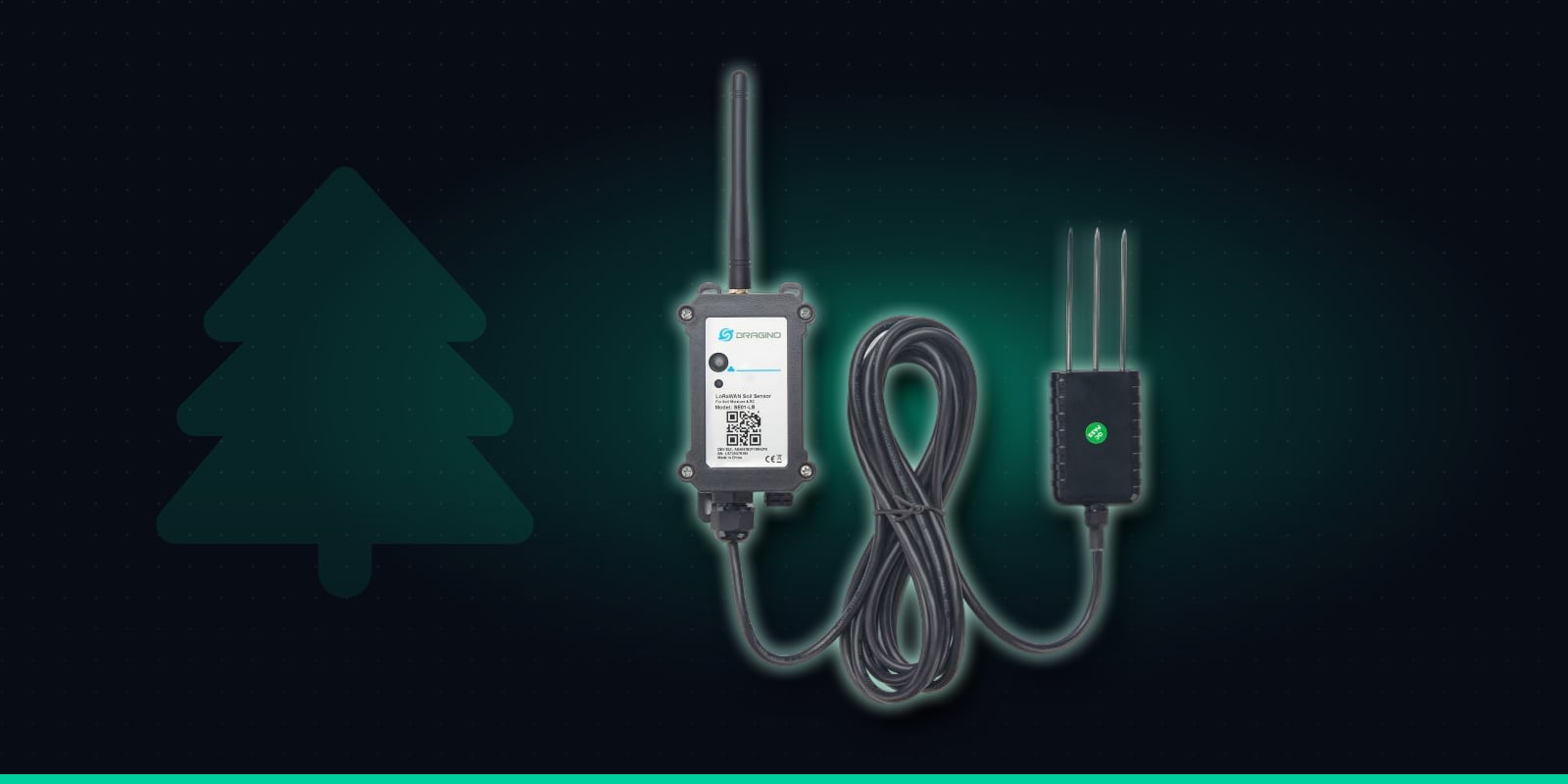
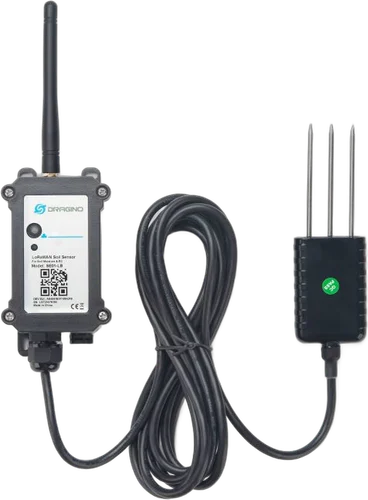
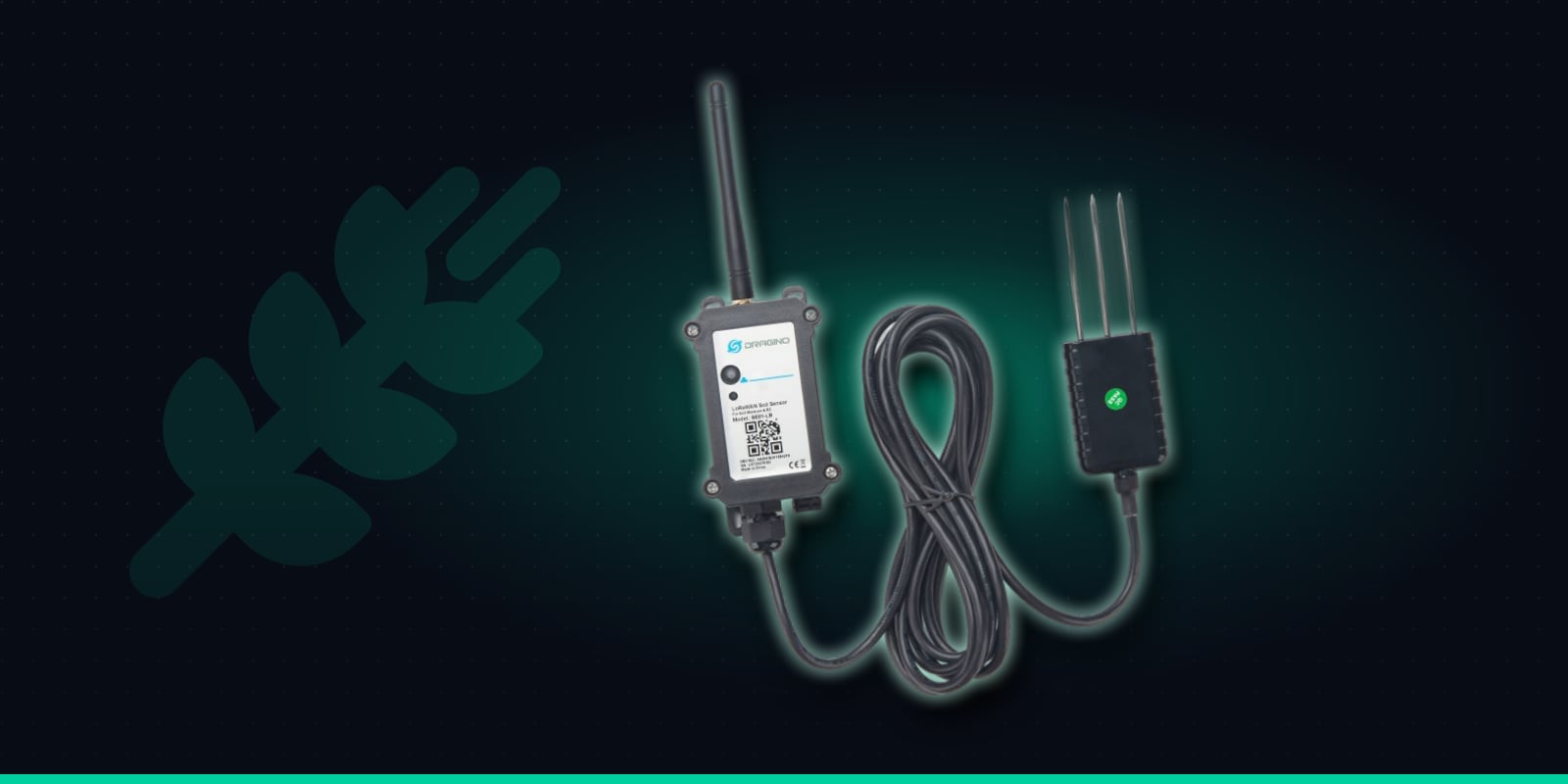
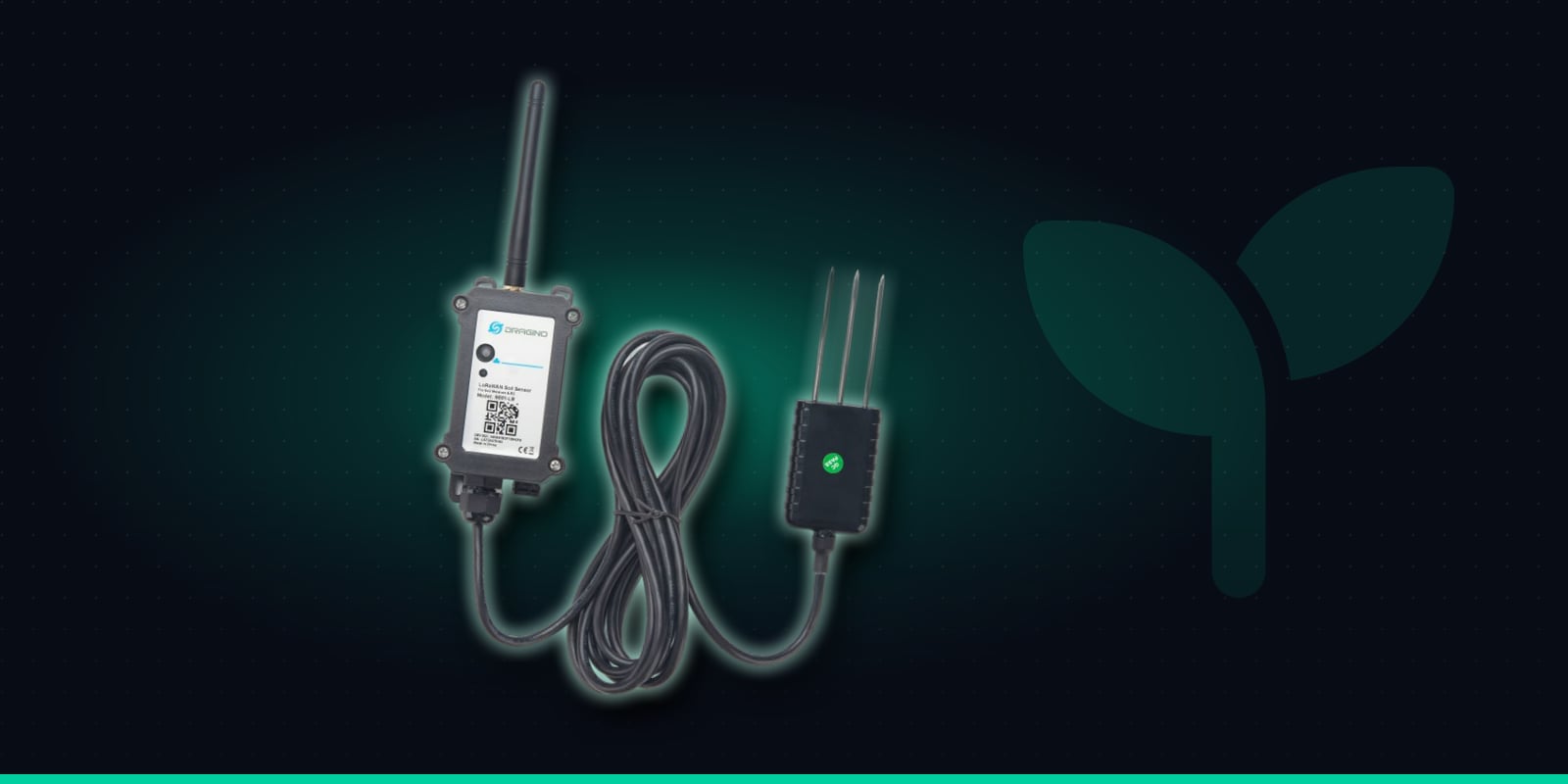
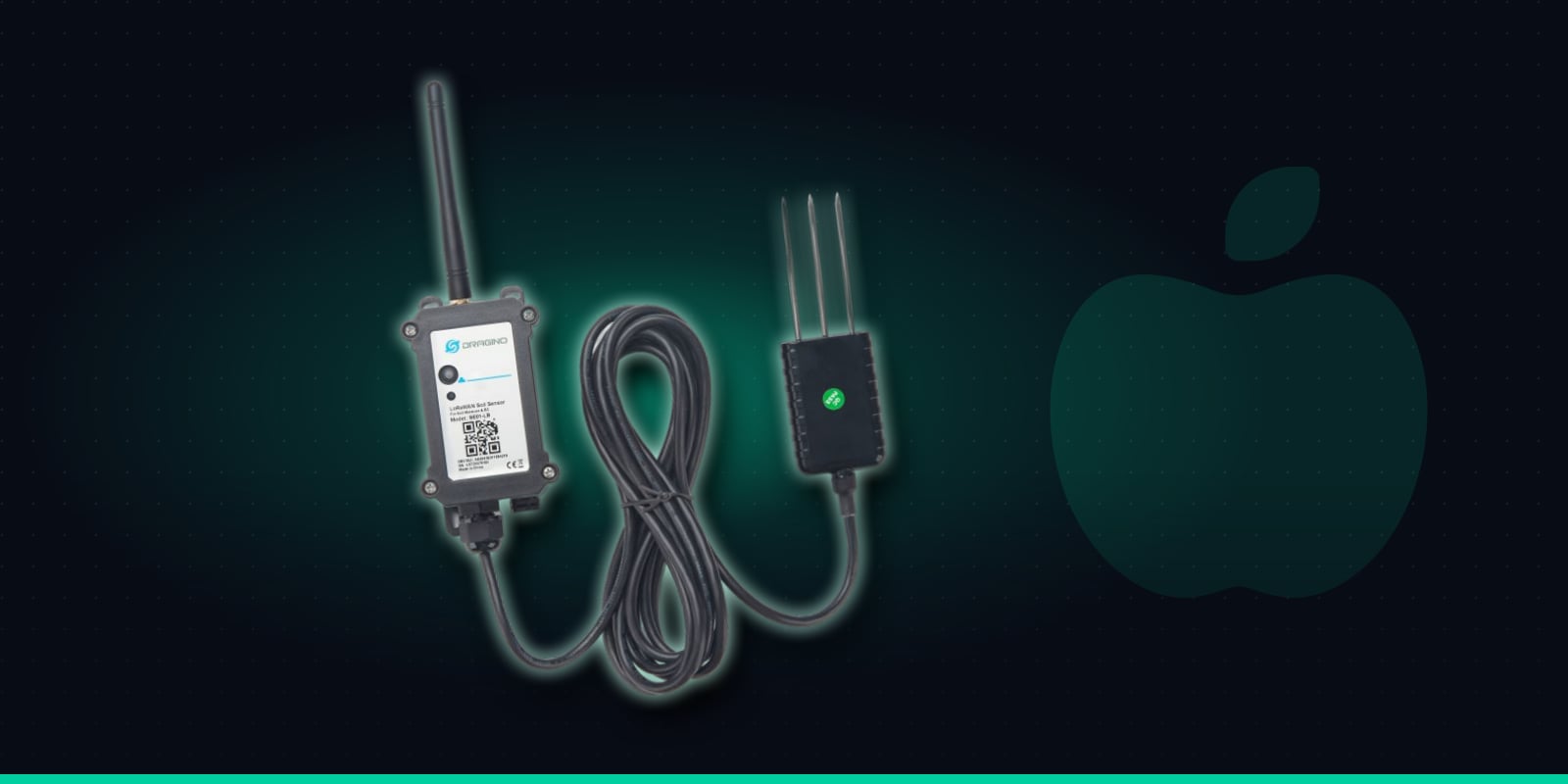
The SE01-LB pairs a three-pin stainless steel probe on a cable with a weatherproof IP66 enclosure that holds the battery and LoRaWAN radio. The probe is buried at root depth; the enclosure stays at or above ground level, where its radio can reach a gateway. Each device measures one depth with one probe, and reports three readings: soil moisture, soil temperature and soil electrical conductivity (EC).
Moisture tells you when to water. Temperature shows when the ground is warming up in spring and how much warmer an exposed pit runs than a shaded one. EC rises with dissolved salts, which is worth watching on streets that are gritted in winter. The sensor reports every 20 minutes by default, and the interval is configurable. The 8500mAh battery is rated for up to 5 years depending on that interval, so one installation can cover several seasons of aftercare.
Soil moisture
0 to 100% volumetric water content. ±3% accuracy up to 53%, ±5% above.
Soil temperature
-40 to 85°C. Better than ±0.3°C between -10 and 50°C.
Soil conductivity (EC)
0 to 20,000 µS/cm, temperature compensated, 2% full-scale accuracy.
Built for outdoors
Weatherproof IP66 enclosure with a buried three-pin probe on a cable.
8500mAh battery
Rated for up to 5 years, depending on reporting interval.
Datalog
Stores readings when out of coverage and sends them once it reconnects.
Specifications from Dragino's SE01-LB documentation. Factory calibrated for mineral soils.
One note on soils: the SE01-LB is factory calibrated for mineral soils. Where a tree pit or bed uses a compost-rich mix or other specialist growing medium - including a root ball grown in container compost - calibrate against your own measurements or treat the readings as relative trends. For watering decisions, the trend is what matters most: how fast a pit dries out after watering or rain.
Choosing Which Trees to Monitor
You don't need a sensor in every pit. The aim is a representative sample: enough probes that every group of trees which behaves differently has at least one sensor speaking for it. Group your planting by:
Species & planting year - this season's trees and those in their second or third year have rooted to different extents, so their water needs differ.
Street exposure - full sun, wind between buildings and heat from surrounding paving all speed up drying, so a sheltered pit and an exposed one belong in different groups.
Soil type - free-draining sandy soil dries quickly; heavy clay holds water and can stay wet.
Street, scheme or round - tag every sensor to match how the crew plans its routes, because the alerts will be organised around that tag.
Setting It Up: From Box to Dashboard
1
Order "Trackpac Ready" sensors
Buy one SE01-LB per monitored pit or bed from Hexaspot and pick the Trackpac Ready option. Each sensor arrives pre-registered on Trackpac, so there are no LoRaWAN keys to copy around.
2
Scan the QR code and name it after the tree
Scan the code with the Trackpac mobile app and give the sensor a name the crew will recognise - "Station Road, pit 12" or "Bandstand rose bed 2". The name is what appears in the alert.
3
Install the probe at root depth
For a new tree, most roots are typically still in the original root ball for the first season or so, so place the probe close to its edge, at roughly the depth of the roots. Following Dragino's guidance, pick a spot free of stones, dig a small hole, push the probe horizontally into the undisturbed side of the hole at the measurement depth and backfill. Don't wiggle the probe once it's in.
4
Protect the sensor body from curious hands
On a busy street, keep the enclosure discreet: fix it low on the tree stake, or put it in a lockable box at ground level. Keep the antenna clear of metal - a metal lid or solid metal guard will weaken the signal, so choose a plastic lid - and check the first readings arrive on the dashboard before you close everything up.
5
Tag by street and build alert rules per tag
Create one rule per street, scheme or soil type rather than one per sensor. Sensors you add next planting season inherit the rule automatically when you give them the same tag.
Alert Rules That Send the Bowser Where It's Needed
The point is to replace "water everything on the list" with "water these streets today". Trackpac's alert rules turn soil readings into a work list for the crew:
Thresholds from your own soil
Water a monitored pit thoroughly, note the reading once it has drained and watch how it falls over the following days. Set a "below" alert per soil type, well before trees show stress. A range rule, which alerts outside a band, can also flag a clay pit that stays too wet.
Alerts by street, to the crew
Because rules target tags, a dry reading on one street goes by SMS or push notification to the crew covering that street, with an email copy to the tree officer or contract manager.
Working hours, one alert, then "resolved"
Use time windows so alerts land when the crew can act, and a trigger-lock interval so a dry pit sends one message rather than one every reading. When the bowser has been and moisture recovers, the "resolved" message shows the water reached the probe at root depth.
De-icing salt after winter
Dissolved salt raises EC. Record a baseline before the gritting season and add an "above" alert for pits beside gritted roads. EC that stays high after spring rain is worth a soil test, because EC alone can't tell salt from fertiliser.
Parks: New Beds, Seeded Areas and Fresh Turf
The same approach works anywhere a parks team is paying for the water and labour to establish new planting. A probe at root depth in a new flower bed shows whether watering is reaching the roots or just wetting the surface. Newly seeded areas and fresh turf have shallow roots and can dry out quickly in their first weeks, so install the probe shallower there, and use soil temperature to see when the ground has warmed up enough for seed to germinate. Tag each bed or area separately so it carries its own thresholds.
Beyond Alerts: Evidence for Clients and Councils
When a contractor is responsible for aftercare, or a council is checking that a developer's landscape scheme is being looked after, the readings become a shared record of what happened in the ground:
Read-only dashboard for the client
Share a read-only dashboard link with the council, the developer or the client, so they can see soil conditions across the scheme without asking for an update.
A record of watering visits
Each watering visit shows up as a jump in moisture on the history graph, which can help show that aftercare was carried out if a failed tree is ever disputed.
Reports and exports let you compare streets, schemes and seasons and plan next year's watering budget around evidence rather than habit, while webhooks forward readings and alerts to other systems so they can feed the scheduling or irrigation workflow you already use.
Get Started
Water only the trees that need it
Put an SE01-LB in a sample of tree pits and planting beds, tag them by street, and let soil moisture decide where the watering crew goes next.
€123.14 ex VAT from Hexaspot, our sister company in the Connect IoT group. VAT is added at checkout based on your country.
Choose the Trackpac Ready option and the sensor arrives pre-registered on Trackpac - scan the QR code and it's live on your dashboard.
Trackpac covers connectivity, dashboard, alerts and data storage from £15 / €18 per sensor per year.
The SE01-LB uses LoRaWAN, so there is no Wi-Fi to arrange and no SIM card per sensor. A gateway on a depot, park building or other premises can typically cover a large area, although real range depends on the buildings and terrain in between. A dense town centre needs more planning than an open park, and an enclosure at ground level will usually reach less far than one mounted higher. If a sensor does drop out of coverage, its datalog stores readings and sends them once it reconnects. Read our guide to checking LoRaWAN coverage in the UK before you deploy, the LoRaWAN 101 glossary if the terms are new, or our pricing page for subscription details.
Frequently Asked Questions
How many SE01-LB sensors do I need for a street tree planting scheme?↓
You don't need a sensor in every tree pit. Put SE01-LB probes in a representative sample - at least one for each combination of species, soil type and exposure that is likely to behave differently, such as a sunny pit surrounded by paving versus a sheltered pit in a grass verge. Tag each sensor in Trackpac by street or scheme and use its readings as a guide for similar trees nearby, adding sensors where the readings and the condition of the trees don't match.
Where should the soil probe go in a newly planted tree pit?↓
Close to the edge of the root ball, at roughly the depth of the roots, because a young tree's roots are typically still mostly in its original root ball for the first season or so. Dragino recommends a representative spot free of stones: dig a small hole, push the SE01-LB's three-pin probe horizontally into the undisturbed side of the hole at the measurement depth, backfill, and avoid wiggling the probe. Fix the sensor body low on the tree stake or in a lockable box with a plastic lid, keeping the antenna clear of metal so the signal is not weakened.
Can the SE01-LB show road salt reaching street tree pits?↓
It can flag pits worth checking. The SE01-LB measures soil electrical conductivity (EC) from 0 to 20,000 µS/cm with temperature compensation, and dissolved salts raise EC. A pit whose EC climbs after winter gritting and stays high after spring rain is worth investigating. EC is an indicator rather than a salt test: it can't tell you which salt is present - fertiliser raises it too - and a modest reading doesn't rule out sodium building up in the soil, so confirm with a soil test before acting.
Is the SE01-LB accurate in tree-pit soils and compost-rich mixes?↓
The SE01-LB is factory calibrated for mineral soils, where Dragino specifies ±3% volumetric water content up to 53% moisture and ±5% above that. In peat, coir, bark or other specialist growing media, calibrate it against your own measurements or treat the readings as relative trends. For watering decisions, trends are what matter: how fast a pit dries out and whether watering actually raised the moisture at root depth.
What does it cost to monitor tree pits with Trackpac?↓
The Dragino SE01-LB costs €123.14 ex VAT from Hexaspot, Trackpac's sister company in the Connect IoT group, with VAT added at checkout by country. Choose the 'Trackpac Ready' option and it arrives pre-registered, so you only scan its QR code to add it. The Trackpac subscription starts from £15 / €18 per sensor per year and covers connectivity, the dashboard, alerts and data storage. The 8500mAh battery is rated for up to 5 years depending on the reporting interval.